
 After the initial Statement of Information is filed within 90 days of forming the entity, a corporation (‘Inc.”) in California must file a Statement of Information form EVERY year Corps.C. § 1502(a)). A limited liability corporation (“LLC”) files EVERY OTHER YEAR (Corps. C. § 17702.09(a)). See subsequent filing schedule from Secretary of State’s Office.
- Failure
 Medical marijuana protection is unlikely under California fair housing laws. In Ross v. Ragingwire (2008) 42 Cal. 4th 920, the California Supreme Court held that the FEHA does not protect a fired employee who failed a drug test even though he was also a qualified patient under California’s Compassionate Use Act.
 The lease must expressly prohibit the tenant from engaging in conduct that violates any law, that includes Federal law. I suggest delineating, “shall not violate any law, including but not limited to Federal, State, or local laws. Possessing, cultivating and using marijuana in any form remains a violation of federal law even if the U.S.
  Everyone loves a Jewish lawyer, at least I do!
  Usually clients do not understand or want to respond to discovery. Same with lawyers, but be careful with pre-signed verification forms. At trial it does not look good when the client testifies he never saw the discovery before.
  Most landlords will have a tenant requesting a “service” or “companion” animal and show a vague note from a doctor supporting this request. This is an area where the unwary landlord can be bitten pretty hard, but here is an idea which may work, even if it may be almost impossible to get the DA or Police to file an action. Cite Penal Code §365.7 to the tenant and say if he is misrepresenting that his dog is a Licensed or qualified service animal, then you will bring an action against him citing this statute.
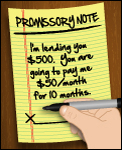 While Commercial Code 3118(a) provides for a 6 year statute of limitations which can apply to a promissory note (9-109(a)(3). The key is this ONLY applies to a negotiable instrument (Comm. Code §3102) So, you have to make sure your promissory note falls under the Commercial Code. Most real estate promissory notes do NOT qualify as negotiable instruments. Here are some factors to consider :