
petpeeves2This is a technical giving the judge discretion.  Code of Civil Procedure § 430.40 states:

  • (a)  A person against whom a complaint or cross-complaint has been filed may, within 30 days after service of the complaint or cross-complaint, demur to the complaint or cross-complaint.
  • (b)  A party who has filed a complaint or cross-complaint may,

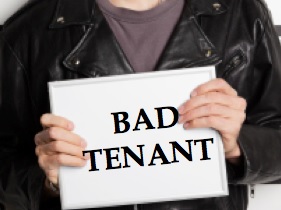
Bad tenantIf a tenant breaks back into, and moves into the property after being evicted, the following laws may be enforced against the tenant by the local police department or Sheriff’s (keep their card after the lockout). However, the specific penalties are a possible misdemeanor or contempt of court. In all likelihood no prosecution will occur, but the police/sheriff will remove them again and give a stern warning.  The problem here is that the specific Penal Code statutes state “returns to settle, reside…” or “returns”.  That seems to mean moving back in, not just to return to get is things out.  But there is still vandalism, trespass  and other possible violations to charge the former tenant.  Some applicable statutes are here …
Continue Reading Tenant Re-entry After Eviction Penalties (Penal Code §§419; 602.5; CCP §1210)

Don't pick fight with landlordIt’s been a while, but today I heard of a renegade landlord doing self help, so here is my warning to landlords who are fed up with their tenant.  Stop, call a lawyer or the police before taking the laws into your own hands or risk liability and a large lawsuit.  (See Code of Civil Procedure §789.3)  More below…
Continue Reading Illegal Evictions and Other Landlord No No’s (Criminal and Civil Liability) (CCP §789.3)

House with gavelStatutes of limitations are confusing.  A common mistake is most lawyers do not know that the statute of limitations to file a lawsuit against a real estate broker runs from the date of possession, or date of close of escrow, not discovery of the mistake, misrepresentation, breach or harm.  See Civil Code §2079.4.

Civil

Trusts are a contractThe world of trusts is quite unique.  Trusts not only can be formed verbally, but notarization is not required.  Probate Code §§ 15200, 15206 and 15207 are silent as to requiring a notarization, therefore, no notarization required!  A trust is essentially a contract.  But for real property, it must be in writing. Probate Code §15206

warning bad lawyer aheadA judgment debtor (he essentially acted as an attorney even before passing the bar exam, and thought nothing of preventing a conflict of interest with his client) was ordered to produce his tax returns as to a half a million dollar judgment against him.  The Court of Appeal stated the purpose of a judgment debtor examination is to leave no stone unturned, and the debtor must produce his tax returns. (Li v. Yan (2016) 247 Cal. App. 4th 56.) http://www.courts.ca.gov/opinions/documents/A144994.DOC
Continue Reading Judgment Debtor Required to Produce Tax Returns at ORAP (Li v. Yan (2016) 247 Cal. App. 4th 56)